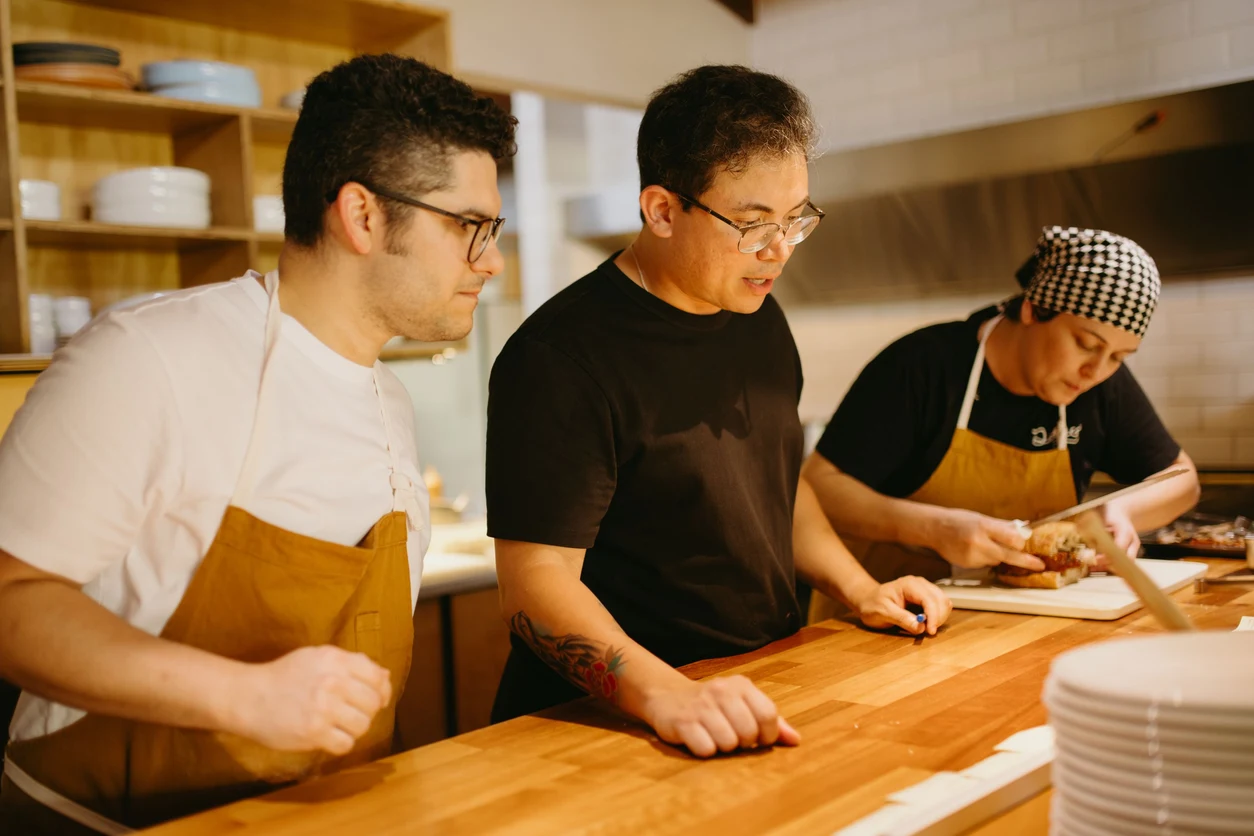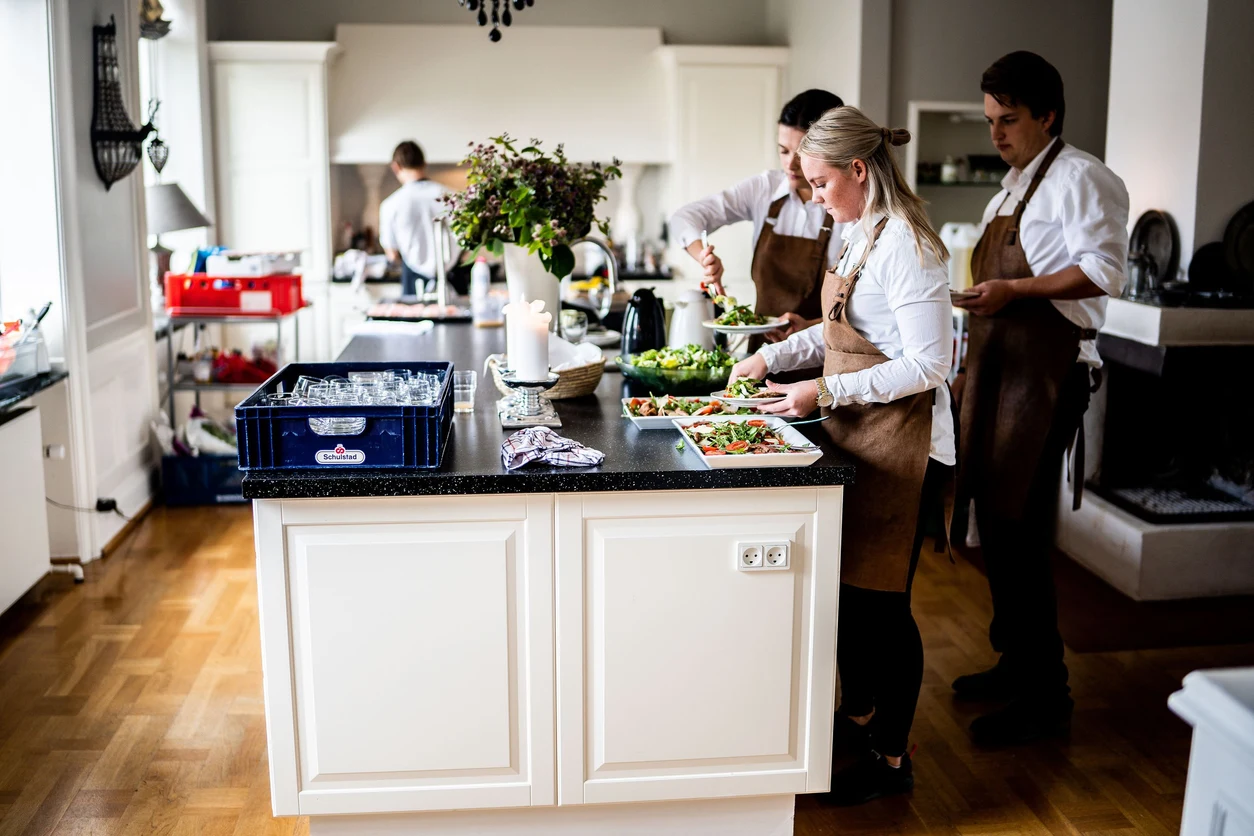
From the pass to the dining room, a short phrase works only when everyone understands it. Use this practical glossary to introduce common restaurant terms and agree how your own team uses them.
Use the glossary as a conversation starter
Restaurant vocabulary combines job titles, physical locations, cooking language and local shorthand. A familiar word can carry a slightly different meaning in another kitchen. Explain the term, show the real situation and ask the new team member to describe the next action in their own words.
Keep a short house glossary beside the training material. Include the terms people actually hear during service, rather than asking them to memorize every expression in the industry. The definitions below are a starting point; the restaurant’s approved procedures determine how an action is carried out.
People and places
Begin with the room and the handoffs. Walk the route from order taking to preparation and collection, pointing out who coordinates each stage.
| Term | Meaning |
|---|---|
| Front of house (FOH) | The guest-facing team and service areas. |
| Back of house (BOH) | The kitchen and supporting operational areas. |
| Pass | The point where finished dishes leave the kitchen. |
| Line | The cooking stations used during service. |
| Expo / expediter | The person coordinating dishes and their handoff. |
| Sous chef | A chef supporting the head chef’s kitchen leadership. |
| Runner | A team member taking dishes to guests. |
| Section | A defined group of tables or service area. |
Short calls during service
These calls are useful when the team shares their meaning. Escoffier’s kitchen-language guide explains familiar phrases such as “all day,” “fire” and “behind.” Pair each call with the required response in your own operation, and encourage people to ask when a message is unclear.
For example, an original training scenario could begin with two soup orders followed by three more. The team can confirm that five soups remain to prepare, then distinguish that total from a request to start one particular table. Rehearse the exchange calmly before trying it in a busy service.
| Term | Meaning |
|---|---|
| All day | The combined quantity currently needed across orders. |
| Fire | Begin preparing the indicated dish or course. |
| Heard | The instruction was received and understood. |
| Behind | Someone is moving behind another team member. |
| Corner | Someone is approaching a corner or blind turn. |
| Hands | Help is needed to carry ready dishes. |
| On the fly | A dish is needed urgently. |
| 86 | An item is unavailable or removed from service. |
| In the weeds | The workload has fallen behind the available capacity. |
Orders, tables and guest visits
Teach the difference between a guest count, a table and an order record. They describe different parts of service. A table may contain several guests, and those guests may have more than one check. Use complete identifiers when a short nickname could point to the wrong table or dish.
| Term | Meaning |
|---|---|
| Cover | One guest served or counted for a service. |
| Two-top / four-top | A table or party described by its size. |
| Walk-in guest | A guest arriving without a reservation. |
| Table turn | A table becoming available for another party. |
| Ticket / chit | The order record used for preparation or service. |
| Modifier | A selected change or option on an ordered item. |
| Course | A group of dishes served as one stage. |
| Check / bill | The guest’s record of charges for the visit. |
Preparation and stock
A preparation instruction should name the item, quantity and unit as well as any shorthand. “One case” is not enough when suppliers use different pack sizes. Show the actual storage area, label or recipe card so the term connects to a visible part of the job.
| Term | Meaning |
|---|---|
| Mise en place | Ingredients and tools organized for the work ahead. |
| Prep list | The preparation tasks and quantities required. |
| Batch | A quantity made together in one preparation run. |
| Portion | The specified amount served for an item. |
| Yield | The usable output from an ingredient or batch. |
| Par level | A planned quantity to keep available. |
| Walk-in cooler | A refrigerated storage room. |
| Stock count | A recorded physical quantity of inventory. |
Numbers discussed in the office
When a conversation moves from service to reports, ask which period and costs a number includes. Two percentages with similar labels can answer different questions. Keep the report definition with the figure so the team compares the same measure over time.
| Term | Meaning |
|---|---|
| COGS | Cost of goods assigned to sales for the period. |
| Gross profit | Revenue less the defined cost of goods sold. |
| Average check | Defined check sales divided by the matching check count. |
| Food cost percentage | Defined food cost divided by matching food sales. |
Keep guest conversations in plain language
A shorthand phrase that helps the kitchen may confuse a guest. Explain an unavailable item directly, describe the next step and give information you can support. A guest does not need to understand the team’s internal vocabulary to receive a thoughtful answer.
Use the end-of-shift conversation to collect unfamiliar or ambiguous phrases. Add the useful ones to the house glossary with a concrete example. Remove terms that create confusion, and make sure a person joining for one shift receives the same explanation as the regular team.
Frequently asked questions
Does every restaurant use the same terms?
No. Common expressions travel between kitchens, but local meanings and procedures differ. Ask how a term is used by the team you are working with.
Does learning the terminology replace training?
No. Knowing a word is different from being trained to perform the task. Pair vocabulary with the restaurant’s actual procedures, supervision and practice.
What does “all day” mean?
It usually communicates the total quantity currently needed across the outstanding orders. Confirm the item and the house counting process so it is not confused with a new individual order.