Sell-through rate: what sold, what stayed and what to do next.
Turn one clearly defined batch of stock into a useful buying conversation. Here’s the formula, a worked example and a calculator you can try.
Page 1 of 1. 13 articles.
Turn one clearly defined batch of stock into a useful buying conversation. Here’s the formula, a worked example and a calculator you can try.
From the first product record to the next reorder, build a stock routine your team can understand, repeat and check.
A clear explanation of barcodes, SKUs and product identifiers—plus the checks that make a label useful at the counter.
Prepare the purpose, timing and questions behind a funding conversation. This is a general planning guide, not a Taply financing offer.
Evaluate the daily handoff between store records, payouts and the books. Use three current provider examples and a practical review checklist.
A useful store experience starts with something a customer wants to try, learn or make. Explore ten practical ideas and a plan for testing one.
Build a clear record of identity, ownership, location and condition—especially when an item leaves the display case for a fitting, repair or transfer.
A practical routine for preparing your shelves, counting consistently and investigating differences.
Start with counter space, scanning, receipts and the customer’s side of checkout.
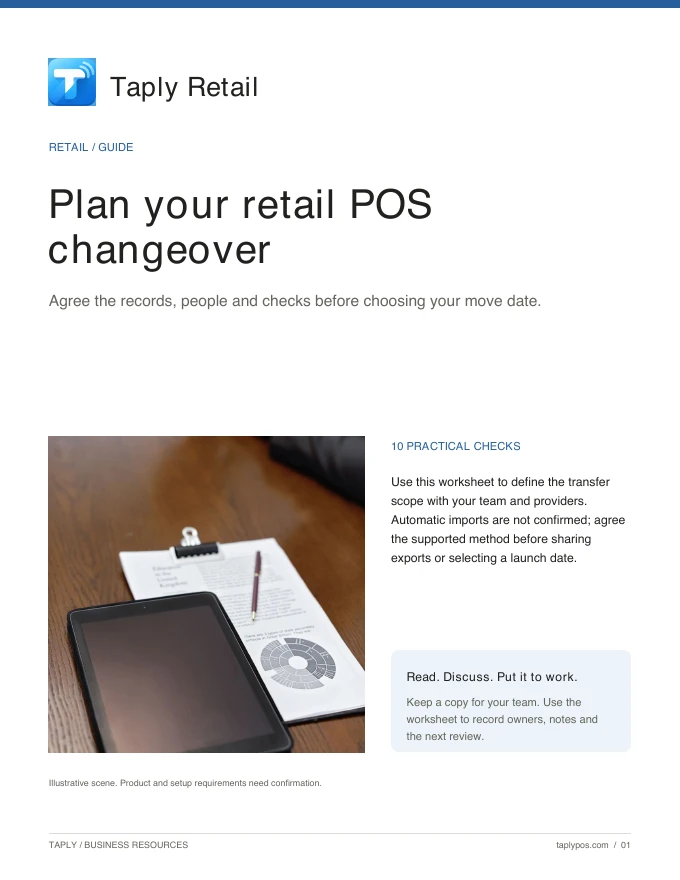
Keep the catalog, equipment, records and people in view before choosing a changeover date.
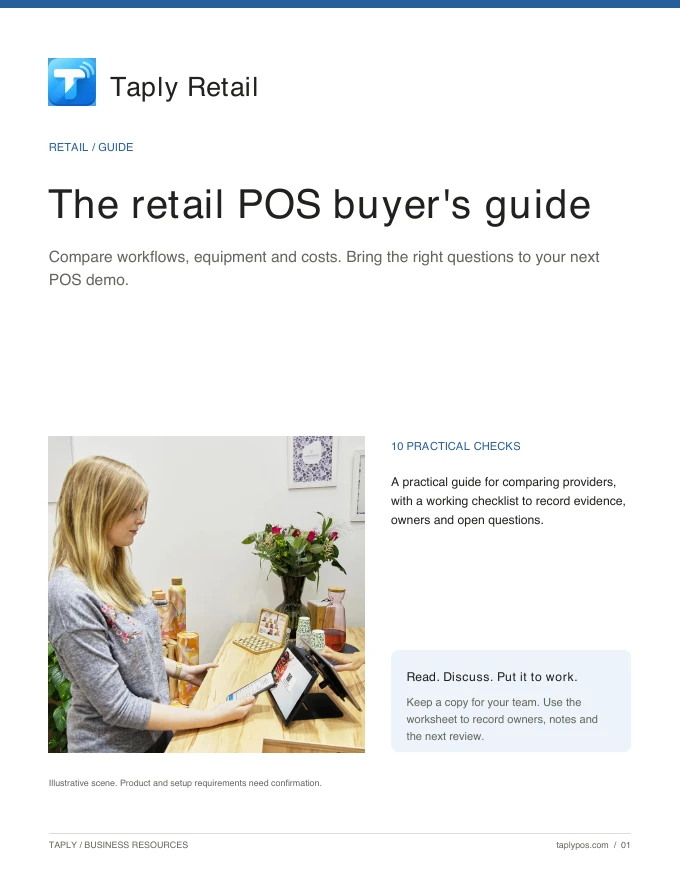
Turn a long feature list into a useful comparison of workflows, equipment, costs and support.
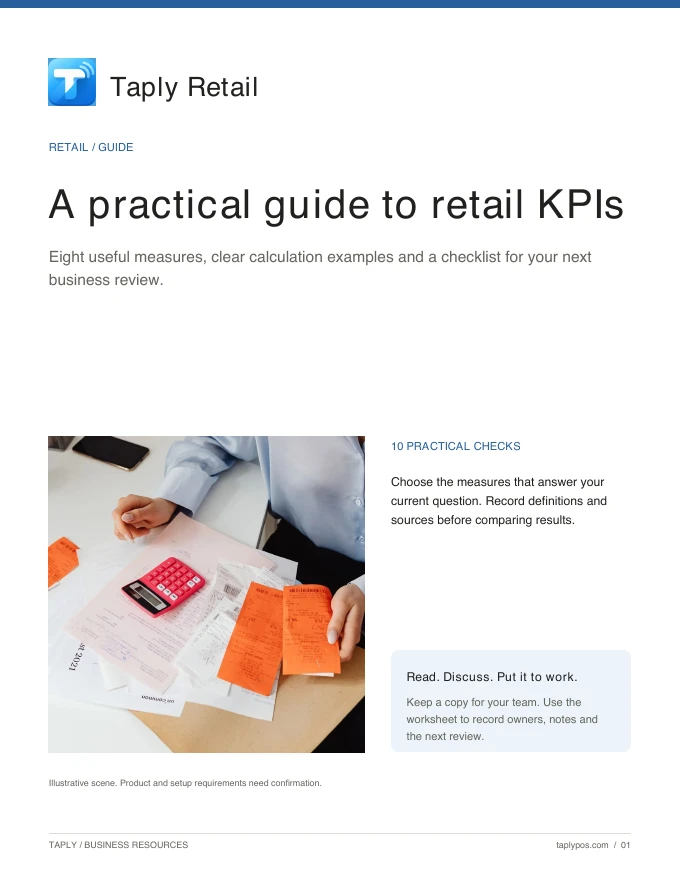
Define your numbers, keep the comparison consistent and turn a weekly review into one practical next step.
Make product information useful, check how your pages are discovered and keep a clear record of what you improve.
Choose the Taply articles and updates you’d like to receive.